Iris ensata | Rose Queen | Japanese Water Iris
When you are looking for an easy-care flower that loves wet conditions, with a splash of gorgeous colour then the Japanese Iris Rose Queen is just what you need!
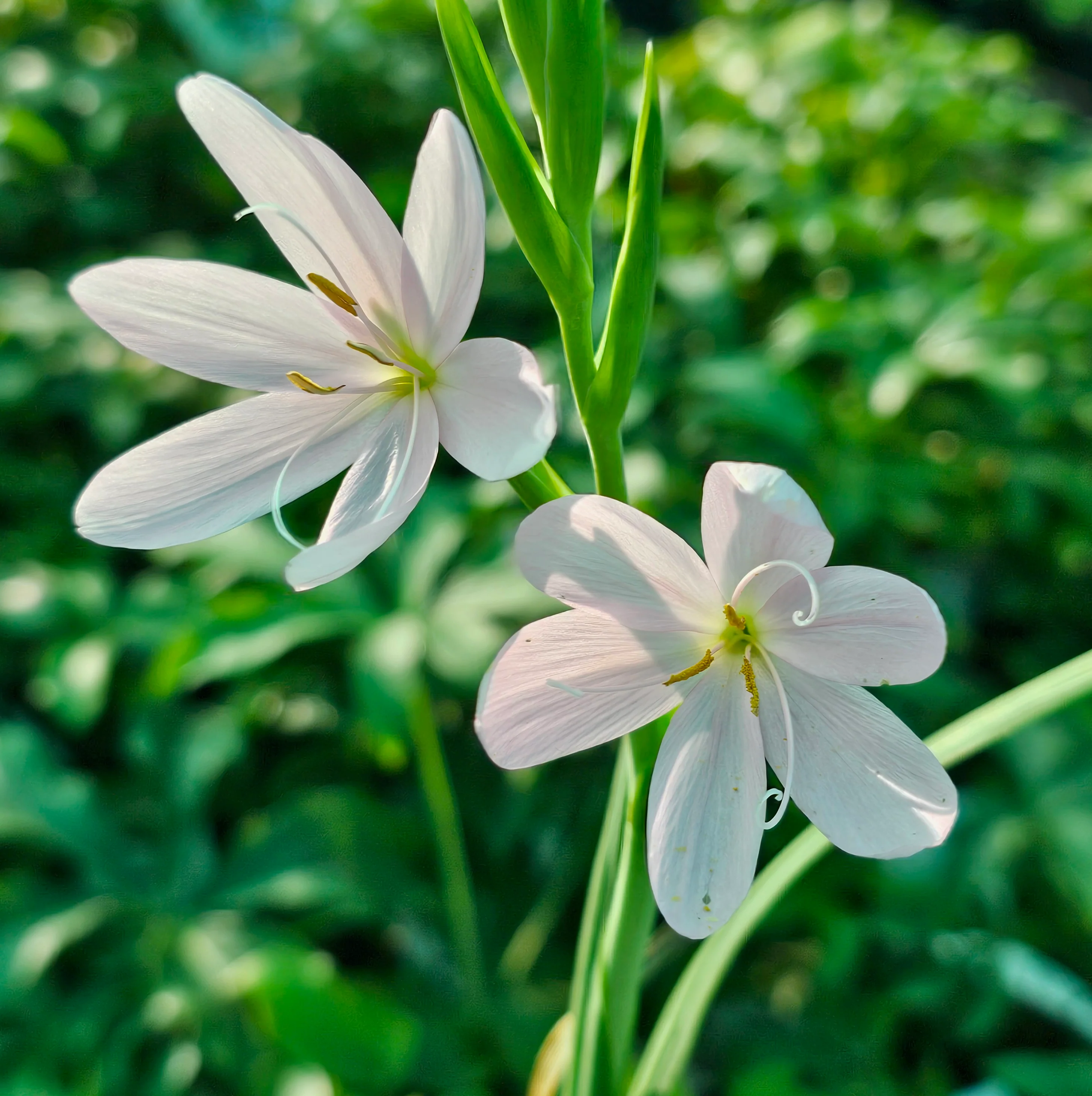
This flowering perennial has huge, soft drooping petals of semi double, lavender-pink flowers that fade to pale pink, approximately 25cm across on strong stems in midsummer. Coupled with attractive medium sword shaped, linear green foliage that is about 80 cm in height and spead 50 cm. These lovely flowers can also be used as a cut flower.
Japanese Irises usually produce one branch with 2 buds in the terminal and 2 in the branch and are the last Irises to bloom, usually a couple of weeks after the Siberian Irises and about three weeks after the tall bearded Irises that we grow in our gardens.
A native of Japan, these striking iris are among the most elegant and breathtaking Irises and they have been cultivated in Japan for over 500 years.
Unlike many other garden flowers, getting the maximum performance out of your Japanese iris does not involve planting in a well-draining soil. In fact, Japanese iris plants flourish in boggy areas, near ponds and water features or you can even pot them into pots and place them into water, the best mix for this is a heavy soil such as clay with some sand mixed in. Growing in either full sun or partial shade is fine. You can grow these in ordinary garden soils or perennial borders, the key to success however is adequate moisture, particularly during their growing season. The plants are considered heavy feeders so a balanced fertiliser in spring and just before flowering will help maximise their flowering potential, so a heavy mulch will help with this.
Dividing the rhizomes every three to four years in mid summer to early autumn will ensure that your plants continue to flower prolifically. When plants become crowded they tend to offer fewer flowers so division will ensure that their optimum growing conditions are provided.
Winter dormant | Hardy
Height to 90cm x clumping to about 60cm
Plant size PB2 | Equivalent 1.2 litres
Product Information
Product Information
Shipping & Returns
Shipping & Returns

Iris ensata | Rose Queen | Japanese Water Iris
Iris ensata | Rose Queen | Japanese Water Iris
When you are looking for an easy-care flower that loves wet conditions, with a splash of gorgeous colour then the Japanese Iris Rose Queen is just what you need!
This flowering perennial has huge, soft drooping petals of semi double, lavender-pink flowers that fade to pale pink, approximately 25cm across on strong stems in midsummer. Coupled with attractive medium sword shaped, linear green foliage that is about 80 cm in height and spead 50 cm. These lovely flowers can also be used as a cut flower.
Japanese Irises usually produce one branch with 2 buds in the terminal and 2 in the branch and are the last Irises to bloom, usually a couple of weeks after the Siberian Irises and about three weeks after the tall bearded Irises that we grow in our gardens.
A native of Japan, these striking iris are among the most elegant and breathtaking Irises and they have been cultivated in Japan for over 500 years.
Unlike many other garden flowers, getting the maximum performance out of your Japanese iris does not involve planting in a well-draining soil. In fact, Japanese iris plants flourish in boggy areas, near ponds and water features or you can even pot them into pots and place them into water, the best mix for this is a heavy soil such as clay with some sand mixed in. Growing in either full sun or partial shade is fine. You can grow these in ordinary garden soils or perennial borders, the key to success however is adequate moisture, particularly during their growing season. The plants are considered heavy feeders so a balanced fertiliser in spring and just before flowering will help maximise their flowering potential, so a heavy mulch will help with this.
Dividing the rhizomes every three to four years in mid summer to early autumn will ensure that your plants continue to flower prolifically. When plants become crowded they tend to offer fewer flowers so division will ensure that their optimum growing conditions are provided.
Winter dormant | Hardy
Height to 90cm x clumping to about 60cm
Plant size PB2 | Equivalent 1.2 litres
$9.39
Iris ensata | Rose Queen | Japanese Water Iris—
$9.39
Product Information
Product Information
Shipping & Returns
Shipping & Returns
Description
When you are looking for an easy-care flower that loves wet conditions, with a splash of gorgeous colour then the Japanese Iris Rose Queen is just what you need!
This flowering perennial has huge, soft drooping petals of semi double, lavender-pink flowers that fade to pale pink, approximately 25cm across on strong stems in midsummer. Coupled with attractive medium sword shaped, linear green foliage that is about 80 cm in height and spead 50 cm. These lovely flowers can also be used as a cut flower.
Japanese Irises usually produce one branch with 2 buds in the terminal and 2 in the branch and are the last Irises to bloom, usually a couple of weeks after the Siberian Irises and about three weeks after the tall bearded Irises that we grow in our gardens.
A native of Japan, these striking iris are among the most elegant and breathtaking Irises and they have been cultivated in Japan for over 500 years.
Unlike many other garden flowers, getting the maximum performance out of your Japanese iris does not involve planting in a well-draining soil. In fact, Japanese iris plants flourish in boggy areas, near ponds and water features or you can even pot them into pots and place them into water, the best mix for this is a heavy soil such as clay with some sand mixed in. Growing in either full sun or partial shade is fine. You can grow these in ordinary garden soils or perennial borders, the key to success however is adequate moisture, particularly during their growing season. The plants are considered heavy feeders so a balanced fertiliser in spring and just before flowering will help maximise their flowering potential, so a heavy mulch will help with this.
Dividing the rhizomes every three to four years in mid summer to early autumn will ensure that your plants continue to flower prolifically. When plants become crowded they tend to offer fewer flowers so division will ensure that their optimum growing conditions are provided.
Winter dormant | Hardy
Height to 90cm x clumping to about 60cm
Plant size PB2 | Equivalent 1.2 litres